How an ex-Singapore resident went from banker to winemaker
Advertisement
People
How an ex-Singapore resident went from banker to winemaker
Searching for a different step of life, Cambridge-educated Tai-Ran Niew left a lucrative career in investment banking in Asia to pursue winemaking in America. Today, he grows Chardonnay and embraces a minimalistic way of farming.
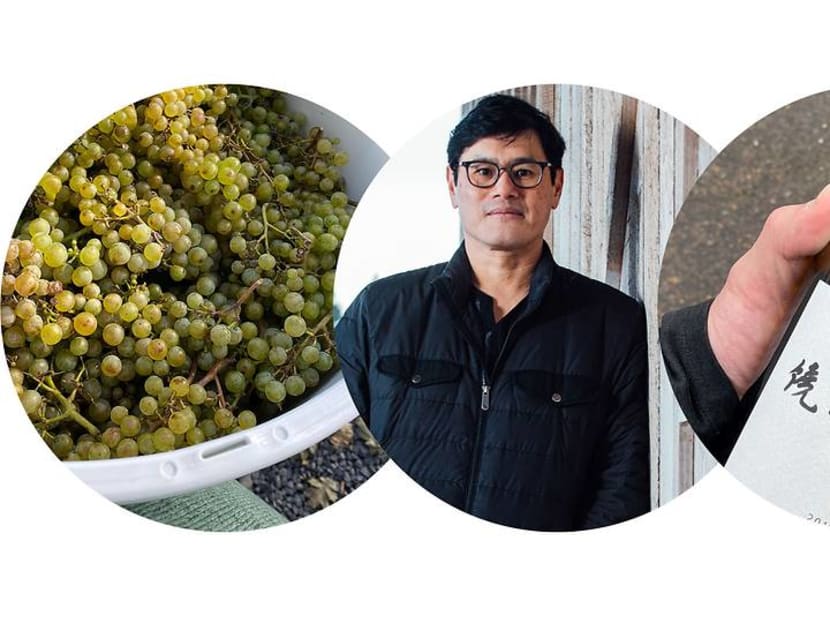
Before winemaking came along, Tai-Ran Niew held a white-collar, jet-setting job. (Photo: Tai-Ran Niew)
07 Jun 2022 06:30AM (Updated: 05 Jul 2022 02:10AM)
Oregon-based winemaker Tai-Ran Niew, a Briton who grew up in Singapore, did not plan to be a winemaker. He kind of vicious into information technology.
"I went into winemaking without a predetermined idea of the path I wanted to have," said Niew, 53, over a phone interview with CNA Luxury. "It was like putting together a jigsaw puzzle. Yous pick upward a couple of pieces forth the fashion, and the picture gets clearer and clearer."
Earlier winemaking came along, Niew held a white-collar, jet-setting job. His story is the modern parable of the corporate slave giving it all upwardly to observe life's answers in nature.
When he was three, he moved from England to Singapore with his family. His begetter, a Malaysian, was a lecturer at the now-defunct Nanyang Academy in Jurong.
They lived on the campus, correct next to a rainforest (this was in the 1970s, when the area was undeveloped). The military ran exercises in the woods, and thirsty soldiers would oft come up round asking for water, to which Niew and his blood brother would oblige.
Afterward completing his O-Levels, he returned to U.k. to study aeronautical engineering at the Academy of Cambridge, graduating with a PhD.
He and then worked as an investment banker in Hong Kong, Singapore and Beijing for 12 years. He left the finance industry in 2006.
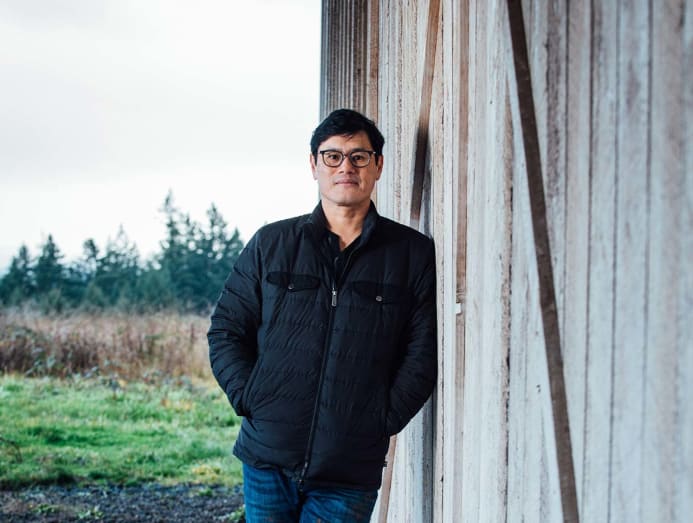
READ> Who is the begetter-and-son team behind one of Singapore'due south meridian wine distributors?
"The primary reason for leaving was that I had been [in finance] for a long time," he said. "I wanted a dissimilar stride of life, where the pressures are less immediate and y'all have room to recollect and do inquiry."
Between 2009 and 2013, he visited vino regions in France, Australia and the US, and also did a few harvests, including one with Due south Australian winery Yalumba. He also helped Linda Potato, an American wine writer, do research for her book on American wines, which she co-authored with wine critic Jancis Robinson. The function took him across different American wine regions.
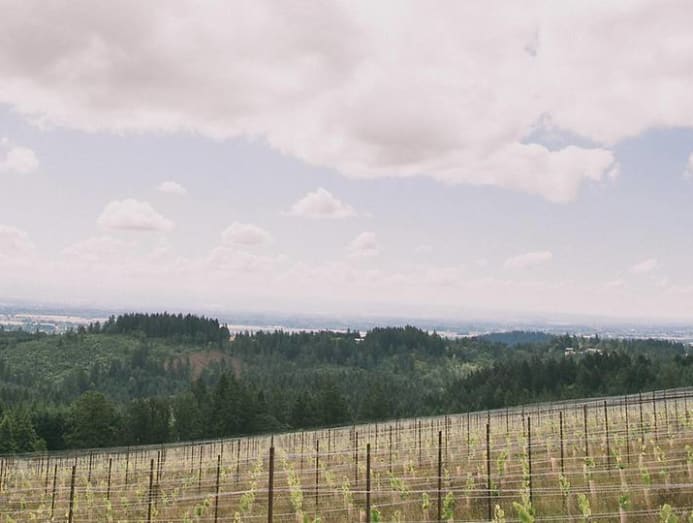
In 2013, he decided to have the plunge and be a winemaker. He wanted to brand wines in a cool climate region, so he ready a 2-hectare vineyard in Oregon's Willamette Valley afterward spending some fourth dimension in the northwest country. He named his winery Niew Vineyards.
"I fell in love with the place. The seasons are more distinct. Information technology had a smaller, tighter community then, which has since grown dramatically," said Niew, who lives in the city of Portland, a forty-minute drive from his vineyards. He is married with two children.
"The Willamette Valley is like Burgundy but fifty-fifty inside the valley you have warm and cooler spots. Distance likewise plays a big part then the conditions are diverse. You can make annihilation you lot want in Oregon if you get to the right parts," he said.
Watch> Thailand is at present making award-winning wines – and hither's the woman backside it
LETTING NATURE Decide
Although Niew consulted experts on his viticulture, he "made almost every decision against the grain". He planted Chardonnay instead of Pinot Noir, the focal grape diverseness of the region. His vineyards, which sit between 228m to 259m, had its off-white share of sceptics who idea the altitude would be too cold to grow Chardonnay. He felt otherwise, citing Chablis in Burgundy every bit an example.
He said: "I recall the mean solar day I planted the vines, a winemaker drove past and said, 'Y'all are never going to become grapes ripening upwards here'."
His embrace of the farming principles of Masanobu Fukuoka – the late Japanese farmer and philosopher known for his not-interventionist approach to agriculture – only accentuates his not-conformist views. He was introduced to Fukuoka's concepts after his wife bought him a copy of the agriculturist's book, The One-Straw Revolution.
Niew eschews the employ of conventional pesticides and fungicides in his vineyards. To tackle powdery mildew – a fungal disease – he sprays milk, a solution considered natural and safety. Before implementing Fukuoka'south ideas, he had considered biodynamic winemaking but found its beliefs, which centre around star divination and homeopathy, hard to accept.
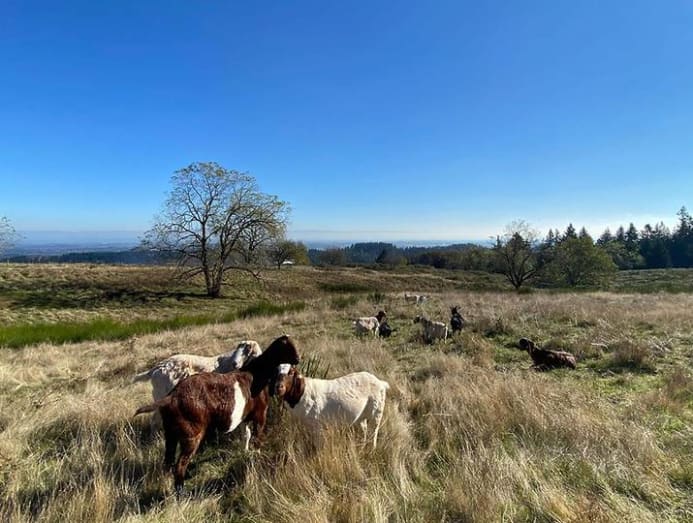
"My scientific background kicked in and I could not quite understand [biodynamic agronomics]," he said. "I'm not implying that its theories cannot be truthful because that would exist arrogant. Broadly speaking, biodynamic farming is skilful for your land. Only as a coherent philosophy, it doesn't stack up in my heed."
He added: "I'm nether no illusion that Fukuoka's mode will deliver wines of superior quality. Later all, some of the greatest wines we drink today are made from conventional viticulture. The path I have chosen is not a critique of conventional, organic, or biodynamic winemaking – it's a personal pick of finding a protocol that's logically consistent and philosophically interesting.
"[Fukuoka'south] philosophy is mind-blowingly elementary, elegant and scientifically robust. It basically asks the question: What would happen if you take a step back and don't practice anything? It'southward about trusting nature to provide y'all the answers."
Some answers take time. Since he planted the vines in 2016, he has yet to make wine from his ain Chardonnay grapes, and he reckons that "won't exist anytime soon". His offset vintage – the Chardonnay 2019, bottled in March 2022 – is made with organic grapes sourced from Lingua Franca, a winery in Willamette Valley'south Eola-Amity Hills.
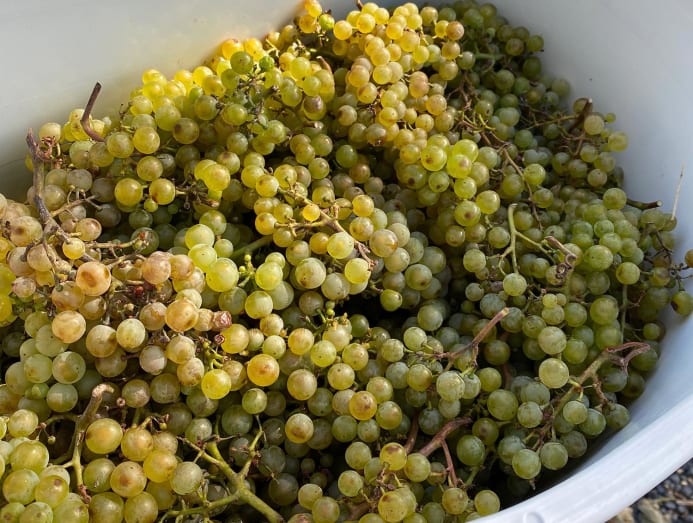
Moving forward, every bit his yield increases, each vintage will contain an increasingly bigger portion of grapes from his own vineyard alongside those from Lingua Franca, he said. "I'll let nature decide; I'll permit the vines tell me how many grapes they want to produce. I hope within the next five years, the twenty-four hours will come when I tin can brand 100 cases [1,200 bottles] from my ain grapes."
Since he had no wine to sell in 2020, the pandemic was irrelevant to his business concern until he released his countdown vintage.
The Chardonnay 2019, which he described as having a saline, fresh, minerally style that is reminiscent of Burgundy's Puligny-Montrachet, has sold out.
Only i,320 bottles were produced: 504 of them were allocated to Singapore, while the rest were divided betwixt the Us and Japan. Singapore-based wine distributor Wein & Vin had approached him in 2022 nigh importing his vino to the metropolis-state. (Wein & Vin is taking enquiries from private customers for future orders.)
Earlier the pandemic, he used to visit Singapore every Chinese New Year as he however has family living here. Singapore is elevation of his travel list in one case the world is safe.
READ> Nosotros ask Singapore restaurateurs: What wines do you drink at home?
AN ASIAN VOICE
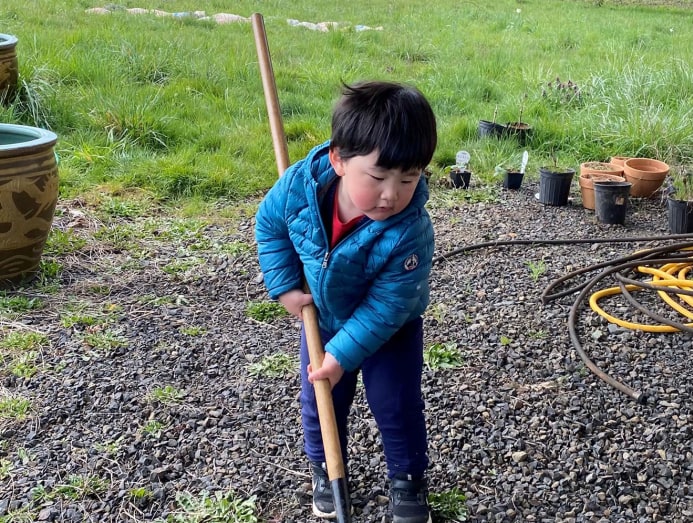
In Oregon, Niew belongs to a small community of Asian winemakers, a minority group that includes Japanese winemakers Junichi Fujita and Akiko Shiba, and Chinese-American viticulturalist Mark Chien.
Niew said he hasn't faced any barriers in the wine industry considering of his ethnicity. "I don't recollect people will discover it difficult to accept wines made past Asian winemakers here," he said.
"Obviously, the history of wine has been dominated by a Euro-centric framework. A large number of wine courses are also teaching you how to gustation wine like an English wine merchant. At that place'south nothing wrong with that. But as an Asian, you tin say, I don't take to follow those rules. Y'all can bring on lath your own cultural heritage."
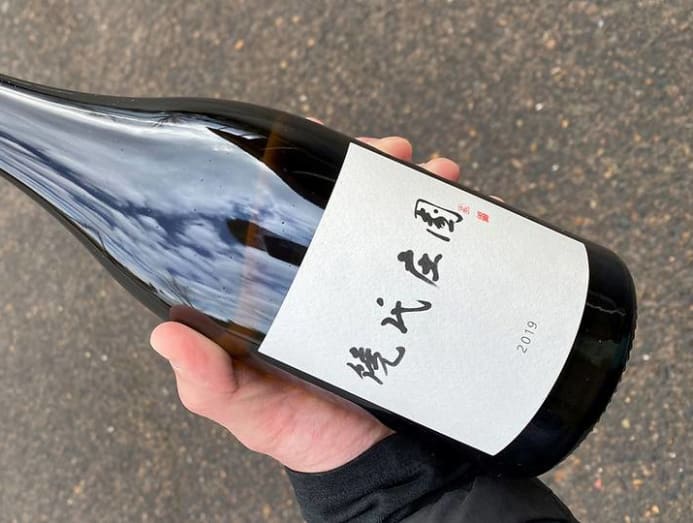
He reckoned he is adding a "Zen kind of style" to his winemaking with his embrace of Fukuoka'due south philosophy.
In social club for winemaking among Asians to be discussed and get more mainstream, Niew highlighted that "offset of all, nosotros need to have more than Asian winemakers".
"The reason why Asian winemakers are in the minority here in the US is elementary: It's not something Asian parents desire their children to do," he said, chuckling.
"If you lot are an Asian immigrant family unit who has put your child through Yale Law School, the odds of you telling him to go work in Burgundy for two years to become a winemaker are cipher."
READ> How climate modify is affecting the taste and structure of the wines yous drink

Recent Searches
Trending Topics
Source: https://cnalifestyle.channelnewsasia.com/people/from-banker-to-winemaker-tai-ran-niew-vineyards-248561
0 Response to "How an ex-Singapore resident went from banker to winemaker"
Post a Comment